
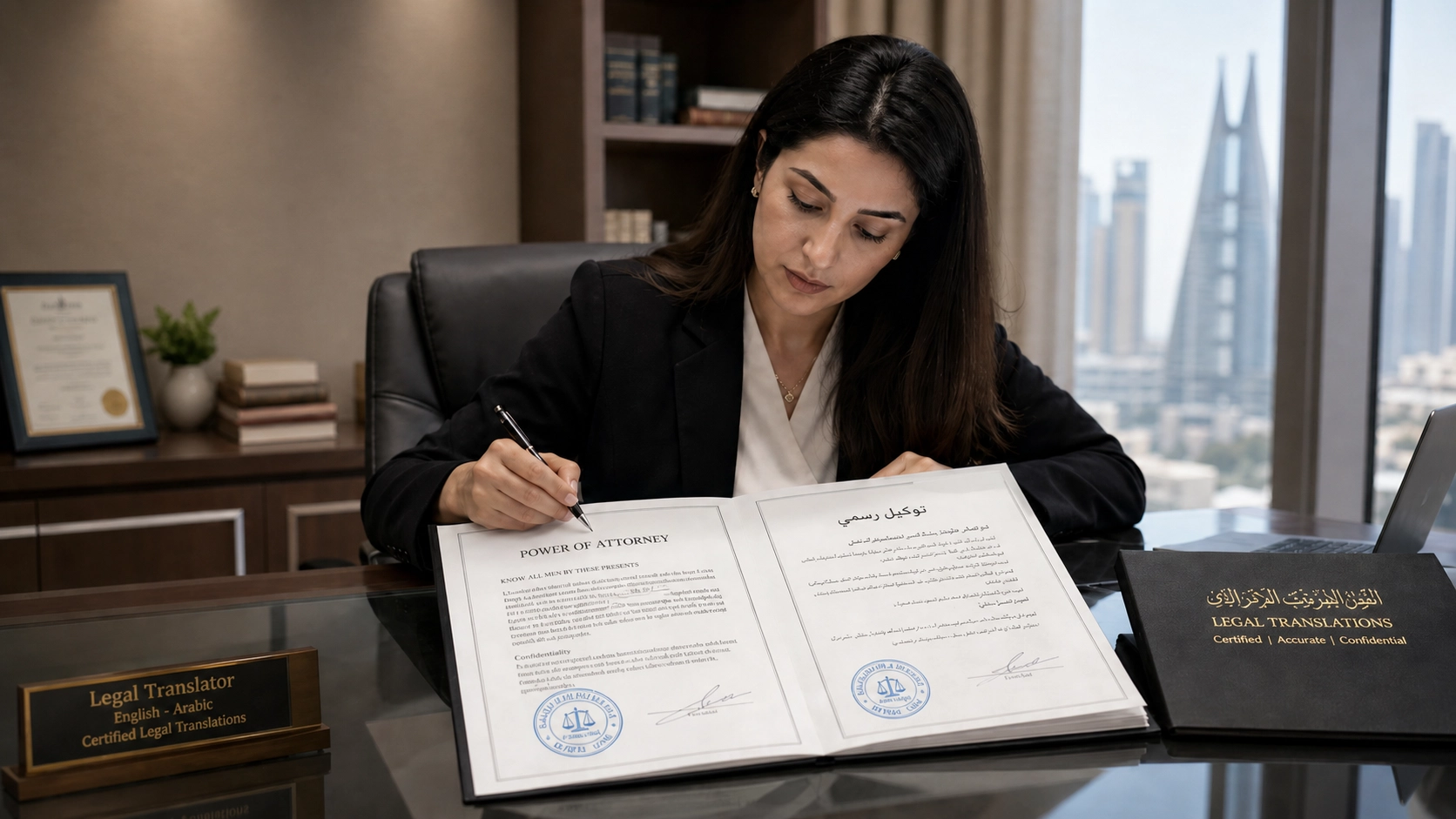
TL;DR: A POA translation for UAE use must be clear, certified, and prepared around the purpose of the document. The right translator can help reduce delays by checking names, powers, format, and supporting records before submission.
Key Takeaways
A Power of Attorney can save you time when you need someone to act for you in the UAE. It is often used for property deals, bank matters, company work, court cases, vehicle transfers, and government submissions.
The issue is simple. If the translation does not match the required wording, format, or supporting records, the POA may be questioned before it can be used.
A Power of Attorney gives someone the right to act for you, so the translation must keep the meaning clear and exact. In the UAE, courts, ministries, notaries, and many government offices use Arabic, which is why a certified Arabic legal translation may be needed.
Small errors can still cause delays. A misspelled name, missing page, unclear stamp, or wrong passport number may be enough for the receiving office to ask for a corrected version.
Before sending your POA for translation, be clear about its purpose. A POA for selling property is different from one for managing a bank account, renewing a trade license, registering a vehicle, or attending court.
The purpose affects the wording, supporting documents, and level of detail needed. Some matters may allow general wording, while property, banking, corporate, and legal matters often need exact powers written clearly.
Some POAs are checked more closely because they involve money, ownership, rights, or legal responsibility. These often include:
The translation should say exactly what the agent is allowed to do. It should not add powers, remove powers, or soften wording that needs to stay firm.
A POA may pass through one office but be questioned by another. Banks, notaries, courts, developers, ministries, free zones, and embassies may each look for different details.
Before translation starts, identify the final place where the POA will be used. This helps the translator prepare the document in the right format and avoid changes later.
A few questions can prevent a lot of back and forth. Before requesting translation, check:
These details help the translation provider understand the full use of the document. They also reduce the risk of paying for a version that later needs to be changed.
Names often cause problems in POA translation. The same person’s name may appear in different ways on a passport, Emirates ID, residence visa, title deed, trade license, bank record, or court file.
Before translation, compare the records and decide which spelling should be followed. This is especially important for Arabic names, compound names, family names, and names that have been transliterated more than once.
Give the translator clear copies of the records that confirm the correct spelling and numbers. Check these details carefully:
One wrong digit or spelling can slow down a bank, court, notary, property, or government submission. It is better to fix these details before the document reaches the counter.
The POA must clearly say what the agent can and cannot do. Vague wording like “manage my property” may not be enough if the agent must sell, lease, collect payment, sign transfer papers, or deal with a developer.
Legal terms do not always carry the same meaning in another language. Words like sell, transfer, mortgage, waive, settle, and represent can change the agent’s authority, so the translator must keep the legal meaning clear, not just choose the closest word.
A POA is often reviewed together with other documents. These may prove identity, ownership, company authority, case details, or the right to complete the transaction.
If these supporting records are in another language, they may also need certified translation. Sharing the full set helps the translator keep names, dates, numbers, and references consistent.
The right documents depend on the purpose of the POA. In many cases, it helps to share:
You do not need to send unrelated private files. Send only what helps confirm the names, powers, and transaction details.
A poor scan can slow down the whole process. Blurry names, cropped stamps, dark shadows, folded pages, and unclear signatures can make the translator ask for a better copy.
Send the full document from the first page to the last page. Include signatures, seals, notary stamps, annexures, and back pages with official marks.
Before uploading or emailing the file, check that:
A clean scan helps the translator work faster and reduces avoidable questions. It also gives the receiving office a better file to review.
A POA should not be treated like a normal letter or simple business text. For UAE use, it may need certified legal translation done by a translator whose work is accepted by official bodies.
Certified legal translation usually includes the required stamp, signature, and translator details. This is different from an informal translation made only for personal understanding.
Vision Translation is a UAE-licensed translation company established in Dubai in 2006, serving individuals, businesses, law firms, government-related clients, and international clients. For POA translation, that experience matters because the wording may affect property, company control, banking access, family matters, or court action.
The company works with legal translators certified by the UAE Ministry of Justice, helping clients prepare POA translations for courts, notaries, ministries, and other official bodies. The team can also guide clients on Arabic translation, bilingual formatting, attestation, or supporting document translation when the next step is unclear.
Your POA may be one of the most important documents in your transaction, so its translation should not be left to guesswork. A clear, certified translation can help you avoid delays, reduce the chance of rejection, and give the receiving office a document they can review with confidence.
 English
  Arabic
  French
  Spanish
  Chinese
  Russian