
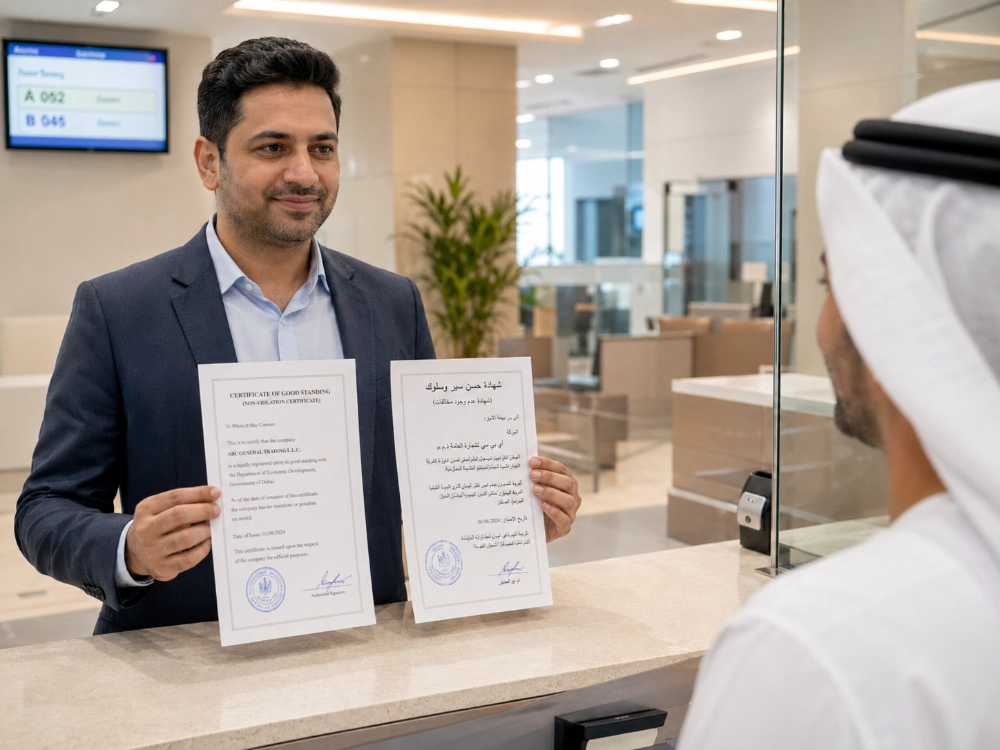
TL;DR: Arabic translation may be required when submitting documents to UAE courts, ministries, immigration offices, embassies, licensing bodies, and other official authorities. Certified translation is often the safer choice when the document affects legal rights, identity, business approvals, education, residency, or compliance.
Key Takeaways
Submitting documents in the UAE can seem easy until a missing Arabic translation holds everything up. Your contract, visa file, certificate, company paper, or court document may be complete in English, but the authority reviewing it may still need an Arabic version.
This guide explains when Arabic translation is needed for UAE submissions, when certified translation is the safer choice, and what to check before you send your documents. It is written for people and businesses dealing with courts, ministries, embassies, free zones, banks, universities, and licensing bodies in the UAE.
Arabic is used in many legal, government, and official processes in the UAE, so a document in English or another language may not be enough on its own. If a reviewer needs to check names, dates, passport numbers, legal clauses, stamps, grades, medical notes, or financial details, the Arabic translation has to be clear and accurate.
A missing or poorly prepared translation can delay visa applications, court filings, marriage registration, school submissions, company setup, licensing, tenders, contracts, and other important processes. The safer move is to check the Arabic translation requirement before you submit, instead of finding out after a rejection, extra fees, or a missed deadline.
Not always. Some companies, schools, HR teams, banks, and free zone portals may accept English documents, especially during the first review.
The requirement usually depends on where the document is going. If it will be submitted to a court, ministry, immigration office, embassy, notary, licensing body, or government department, certified Arabic translation may be needed.
Arabic translation is usually needed when a document affects identity, rights, ownership, immigration, licensing, education, employment, compliance, or legal obligations. The more official the use, the more likely the receiving body will ask for Arabic.
Here are the common cases where you should check the requirement before submission.
Court documents in another language often need Arabic translation before they can be reviewed or used in a UAE case. This may include contracts, powers of attorney, judgments, witness statements, affidavits, expert reports, company records, family papers, arbitration files, and legal notices.
Accuracy matters here. One wrong name, date, amount, clause, or legal term can slow the process or create confusion in court.
Government files often need Arabic translation when they were issued abroad or written in another language. This may apply to:
An English document may pass the first review but still need Arabic translation for final approval. Always check the receiving authority’s requirements before submitting.
Visa, residency, family sponsorship, and immigration files often rely on personal records that must match the applicant’s official documents. Arabic translation may be needed for:
Names, passport numbers, parent names, dates, nationality, and place of birth should be consistent. Even a small spelling difference can lead to questions or correction requests.
Companies in the UAE may need Arabic translation for setup, licensing, contracts, tenders, and regulatory filings, especially when documents come from overseas or were prepared in another language.
This can include trade licenses, company agreements, board resolutions, shareholder documents, financial statements, bank letters, agency agreements, compliance policies, and HR records. A poor translation can delay approvals, slow down deals, or make the business look unprepared.
Academic and professional documents may need Arabic translation when they are submitted to universities, schools, employers, or licensing bodies. These files are often used to check qualifications, eligibility, and professional status.
This can include degrees, diplomas, transcripts, training certificates, professional licences, experience letters, recommendation letters, and course descriptions. The translation should clearly show grades, dates, institution names, qualification titles, stamps, and signatures, especially for regulated fields such as healthcare, engineering, education, finance, and legal services.
Some documents need Arabic translation for attestation, notarisation, embassy submission, or Ministry of Foreign Affairs related processing. This may include personal certificates, company authorisations, powers of attorney, commercial papers, education records, legal declarations, and foreign judgments.
The order of steps matters. Some documents must be attested before translation, while others need the translation submitted with the original, so using the wrong version, missing a stamp, or choosing the wrong format can send the file back.
Standard Arabic translation can be useful for internal records, general business use, marketing material, reference copies, websites, and informal review. It focuses on making the content clear and readable.
Certified Arabic translation is prepared for official use. It usually includes confirmation that the translation is accurate and complete, along with the stamp, signature, or details required by the receiving authority.
A good Arabic translation should be easy to check against the original. The reviewer should not have to guess what a section, stamp, note, or table means.
It should clearly cover:
The layout should also stay clear and easy to follow. Since many submissions include personal, legal, financial, or company details, the file should be handled carefully from the start.
Most delays come from small mistakes that are easy to avoid, such as:
A quick check before submission can save time, fees, and repeat visits. It also helps make sure the translation matches the authority’s format from the start.
Before sending your documents, ask where the file is going and how it will be used. That will tell you more than the document language alone.
At Vision Translation, we help individuals, businesses, law firms, and organisations prepare Arabic translations for UAE submissions. Established in Dubai in 2006, we work with documents where accuracy, privacy, and clear formatting can make the difference between smooth processing and avoidable delays.
We provide professional translation services for legal, corporate, medical, academic, technical, and government related documents in 100+ languages. We can also help you check the right format before the work begins, so your file is prepared correctly instead of being fixed after rejection.
A UAE submission can be delayed because the document was not translated into Arabic, was not certified properly, or was not prepared in the format the receiving authority expected. That kind of delay is avoidable with the right check at the start.
 Chinese
  English
  Arabic
  French
  Spanish
  Russian